All posts by admin

How Virtual Reality Is Improving the Overall Patient Experience in Hospitals

Hospitals are places of healing, but they can also be unfamiliar, stressful, and emotionally overwhelming for many patients. Long waiting times, complex procedures, unfamiliar equipment, and anxiety about outcomes can all affect how people experience care. 

Virtual reality (VR) is becoming a potent tool to enhance comfort, engagement, and emotional wellbeing during hospital stays as healthcare organisations search for innovative ways to create more patient-centered environments. 

Understanding the Patient Experience  

Patient experience is not just about how a person is clinically, but how safe he feels, how clear the information is, how supported he feels, and how much control he is given.  

Stress and anxiety can negatively influence sleep, cooperation with care teams, and overall satisfaction. For children, older adults, or people undergoing complex treatments, the hospital environment can feel particularly intimidating. 

Digital innovations that focus on comfort and emotional support are being considered to address these challenges. 

What Is Virtual Reality in Healthcare? 

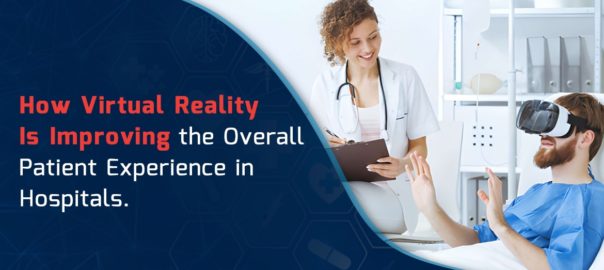
Virtual reality uses head-mounted displays and audio to place individuals inside immersive digital environments. These environments might include: 

  • Calming natural landscapes 
  • Guided relaxation experiences 
  • Interactive educational simulations 
  • Soothing visual journeys 
  • Gentle games designed for clinical settings 

In hospitals, VR experiences are typically designed to be easy to use, short in duration, and supervised by clinical staff. 

Reducing Stress and Anxiety 

Making patients feel more at ease both before and during medical procedures is one of the most promising uses of virtual reality in hospitals.  

Immersion environments have the power to divert focus from clinical settings and substitute them with serene, captivating scenes. The body’s relaxation response can be triggered by gentle visuals, slow motion, and guided breathing techniques, which can reduce tension or feelings of fear.   

Waiting rooms, pre-operative spaces, chemotherapy rooms, and imaging scans can all benefit greatly from this. 

Supporting Emotional Wellbeing 

Hospital stays can be isolated, especially for patients who spend a lot of time in a room or are separated from their loved ones. By enabling patients to explore virtual beaches, forests, museums, or cities worldwide, virtual reality (VR) can provide a sense of escape.   

In an otherwise clinical setting, these experiences can improve mood, lessen feelings of loneliness, and offer brief moments of happiness or normalcy. This psychological comfort can be as crucial for chronic patients as medical care. 

Enhancing Patient Engagement and Cooperation 

When patients feel relaxed and informed, they are often more willing to participate in care. 

VR can also be used for: 

  • Preparing patients for upcoming procedures 
  • Explaining treatments through visual simulations 
  • Demonstrating rehabilitation exercises 
  • Guiding breathing or mindfulness sessions 

Seeing and experiencing information in an immersive way can improve understanding and reduce fear of the unknown, leading to smoother clinical workflows and better communication between patients and staff. 

Helping Pediatric and Geriatric Patients 

While older adults may feel lost in strange situations, children frequently experience fear when they visit the hospital.  

Both groups can feel safer and more at ease with age-appropriate virtual reality experiences, such as serene nature scenes for seniors or playful environments for kids. These tools are appropriate for a variety of patients because they can be modified to accommodate sensory sensitivity and mobility limitations. 

Potential Benefits for Healthcare Providers 

Improving patient experience does not only benefit individuals; it can also help healthcare teams and organizations. 

Hospitals exploring VR-based programs have reported potential advantages such as: 

  • Higher patient satisfaction scores 
  • Reduced procedure-related anxiety 
  • Smoother clinical interactions 
  • Better compliance with instructions 
  • Enhanced reputation for innovation 

When patients feel cared for both a physical and emotional level, trust in healthcare systems grows. 

Safety and Practical Considerations 

While VR is generally well tolerated, hospitals must follow protocols to ensure safe use. This includes: 

  • Screening patients for motion sensitivity or neurological conditions 
  • Sanitizing headsets between uses 
  • Limiting session length 
  • Providing staff supervision 
  • Ensuring content is clinically appropriate 

VR is not intended to replace medical care, but rather to complement existing treatment and support services. 

Looking Ahead: The Future of VR in Hospitals 

Virtual Reality in healthcare is probably going to become more prevalent in hospital settings as clinical research keeps expanding, and hardware gets lighter, cheaper, and easier to clean.   

Future uses could involve use in patient education and rehabilitation, integration with biometric feedback, and customized experiences based on each person’s stress level.   

It is still evident that immersive technology has the power to make hospitals more sympathetic and encouraging environments where patients’ comfort and well-being are prioritized. 
The Benefits of Technology on the Quality of Patient Care

Benefits of health information technology include smooth communication between health-care providers; increase drug safety, reporting and tracking; and increasing quality of care through perfect access to and adherence to guidelines. Strong interoperability is critical to safe care, but this goal has proven evasive. Significant patient safety concerns have already been recognized. It is very important to maintain quality and patient-safety as the main focus.

The benefits of technology in healthcare include the ability to rapidly communicate patient information in a legible format, its ability to retrieve and store data, through increased clarity increased medication safety, which efficiently decreases medication error risks; and the proficiency of retrieval of patient information. However, even though it says a lot, it does not explain the technology and healthcare benefits on the quality of patient care.

Patient electronic-portals-

The patient portal basically is a secured online application that provides patients with access to their all personal health related information. It also provides two-way electronic communication with their care providers using a mobile device or computer. So, patients can easily access their data anytime, anywhere.

Telemedicine-

Telemedicine is basically defined as the utilize of telecommunications technology in healthcare to smooth the patient-to-provider as well as provider-to-provider communications. Communication can be synchronous with the asynchronous transmission of patient clinical information or real-time 2-way video communication. Also, telemedicine can provide all health related information that is remotely collected from the medical devices or from the personal mobile devices. It can be used to monitor patients, and track or change their behavior.

Automated medication dispensing technology-

Basically, automated dispensing cabinets are electronic drug cabinets. It store medication at the point of care with tracking and controlled dispensing of medication distribution. The automated medication dispensing cabinets have been successfully used as medication inventory management tools that help automate the medication dispensing process by reducing the workload on central pharmacies and also keeping better track of patient billing. Thus, patients can get technology benefits from ADC.

Clinical decision support-

The patient-specific information is provided by it for healthcare professionals. This information is purposefully and logically filtered to improve healthcare provider decisions and presented to healthcare professionals at appropriate times. Technology in healthcare includes a range of tools to enhance clinical workflow and decision-making. Thus CDS systems increase patient safety and quality of the care.

Remotely patient monitoring-

It successfully improves patient outcomes for certain chronic conditions including; stroke, heart failure, hypertension, asthma, and COPD. The patient data management system is a system that automatically retrieves data from bedside medical equipment. Now, the data are eventually summarized and reorganized to help healthcare providers interpret the data. Also, it efficiently reduced the occurrence of errors.

Mobile technology in healthcare

Mobile apps are the main thing for improve the accessibility for patients and as well as the healthcare professionals. The mobile apps helps people to easily manage their health as well as their well-being effortlessly like general medical information, access test results, etc.

Nowadays health IT has become an integral part of the practice of medicine. As with any new technology, technology in healthcare brings many potential benefits as well as potential concerns and thus improves the treatment and patient care. Now with the implementation and use of new healthcare technology, we can successfully upgrade patient safety and quality.

How Technology Transforms the Healthcare Sector

Nowadays all aspects of our lives almost have been improved by advanced tech solutions. It also improved the healthcare industry as well. Thus, it improved both the provider and patient experience.

A study shows that technology in healthcare dramatically improves access to healthcare services in Australia. From remote monitoring devices to glucose-monitoring contact lenses to electronic medical records, technology has played an extraordinary role in creating a new Digital Health ecosystem.

Making the Australian health care services secure, safe, and seamless The Australian Government’s National Digital Health Strategy was devised to digitize. Now, we will discuss the importance of technology in healthcare sector.

  1. Machine learning – The new techniques of machine learning can provide better diagnostic support, like Google’s DeepMind and IBM’s Watson. In health care, they have already started to explore potential applications.
  2. Smartphones – Smartphones can now serve for sophisticated new diagnostic and treatments. Ultrasounds, microscopes, and ECG monitors are now able to view skin cancers. And blood pressure monitors that can be plugged into a smartphone. There are other apps that can be used to scan your vital signs. You have to just place the phone on your forehead to measure body temperature and heart rate. It can be used as an effective data collection device and can record a lot of detail about people’s lives.
  3. Genomics – We can easily understand how diseases affect different individuals through the associated field of genomics and genome sequencing. Now it is easy to find out more about the likely effectiveness of medical interventions to treat a disease (pharmacogenomics).
  4. Mobility and cloud access – For increasing accessibility for patients and doctors, it is a tremendous jump in technological advancement. Now, cloud-based solutions are fast becoming integral to a better healthcare ecosystem by sharing diagnostic outcomes to interoperability efficiencies, and managing patient appointments effectively.

Effect of new technology in healthcare sector –

  1. Improved communication – Using video, online discussion platforms and real-time meeting capacities medical professionals can get much smoother communication within healthcare organisations. In-house electronic medical records can be accessed by all relevant departments and care providers. Thus, it improved treatments, patient recovery, and case management.
  2. Easily accessible – Previously, all medical records were held in separate locations with different hospitals and health practitioners. Now, test results, all patient histories, diagnoses, and relevant information are stored centrally in an online database by electronic medical records. Thus, it allows real-time care as well as the ability to see health trends for each individual.
  3. Cost-effective way – Telemedicine/Telehealth services are now becoming a cost-effective way for local health services. It is especially beneficial for regional, rural and remote communities.
  4. Availability of information and big data– The availability of high-level and fast data can be used to automatically identify risk factors. Thus, comparing patient data with data from thousands of other patients can recommend the right preventative treatment.   
  5. Easily manageable– Mobile apps can be easily manageable by anyone. By apps, anyone easily gets check-ups, can find general medical information, or access their test results. Similarly, healthcare professionals can access information relating to diseases and drugs, clinical matter images, etc.

In 2022, the revolution of healthcare technologies can improve the efficiency of healthcare organizations. With the help of these tech trends technology in healthcare, industries automate many repetitive tasks, improve patient health and care, and identify diseases faster.

HealthCare

Centre for Digital Transformation of Health Care Industry

Digital-transformation is one of the effective adoptions of information technology. By using this you can enable technology in healthcare. It is mainly used to improve the effectiveness and performance of an organisation. Through this transformation, the healthcare industry can use the latest methodologies, processes, and technologies and can give a better service to healthcare professionals and patients.

It is basically a combination of employing innovative approaches and advanced technologies to increase the benefit. After adopting this transformation 92% of institutes and healthcare professionals achieve better performance. In the healthcare industry, it creates a positive impact on technology.    

Few concrete examples of this transformation in healthcare are blockchain, artificial intelligence (AI)-enabled medical devices, telemedicine, electronic health records, etc.

Why digital transformation of the health care industry is mandatory?

It gives specially a complete digital healthcare solution to the patients and doctors of a hospital. As you are using technology in healthcare, so it helps to create an efficient healthcare system by which doctors and patients can easily connect easily with each other. It also empowers this industry. Below few advantages are mentioned-

  1. Personalized Services– Through this transformation, you can get accurate health diagnoses. get more effective personalized treatment.
  2. Low-Cost Budget– This transformation always supports the automation As a result of this transformation, all healthcare organisations and institutes can offer.
  3. Low-Cost Services– It also can able to reduce unnecessary cast pending due to traditional healthcare services. So, people are attracted day by day as it can reduce wastage of money.
  4. Get faster workflow– After the transformation, you don’t have to do paperwork. This business transformation replaces the paperwork with digital records. So, it can easily offer optimized and easier access to the health records of It also reduces the examination time of the patient.
  5. Provide Secure Database– For accessing, encrypting, and storing patients’ medical records, this transformation in healthcare provides you with a secure You can also share that anytime, anywhere as per demand to the medical specialists, professionals, laboratories, and patients very easily.
  6. Flawless Interaction with patients– Via video call or chat can provide more effective and efficient online interaction with patients.   

What you will get?

Transformation in healthcare gives many benefits to both healthcare organisations as well as patients. It helps your organisation to grow faster. Below mentioned some beneficial effects of this transformation-

  1. Best Time Management– By implementing technology in healthcare, this transformation gives the maximum amount of time in this Thus it can provide better time management than any traditional healthcare service. You can also get 24×7 accessibility to real-time coordination and patient health records.
  2. Health Services In The Palm of Your Hand– This industry or a patient can access any data or contact doctors anytime anywhere. So, patients can get better health services and they can easily.
  3. Get Better Communication– This transformation enables smooth and better communication between all.
  4. Cost-Effective Solution– You will get this transformation at a minimal cost. You can also save your money after implementing technology in healthcare. So, this industry can easily save money in this both So, your organisation gets maximum benefits.
  5. Improve Healthcare Service– As this industry is patient-oriented, it is mandatory to give proper diagnosis and This transformation provides this easily to the patients.

Conclusion-

If you think that you want this transformation, you are on the right path. It increases productivity, efficiency as well as security of an organisation.

Emergency smartphone app

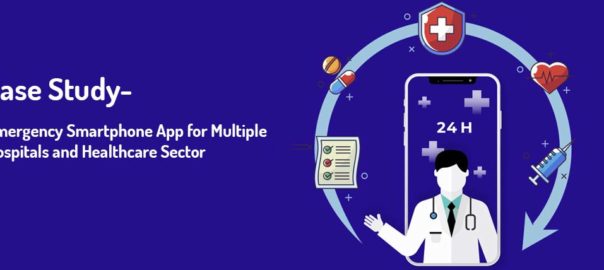
Case Study- Emergency Smartphone App for Multiple Hospitals and Healthcare Sector

Summary 

With the help of improving communication, efficiency, and quality of the service mobile healthcare apps are restructuring the healthcare sector. You can predict that by 2025 this industry will reach a total market size of more than 189 billion US dollars. 

Effective communication and quality of the service transfiguring the healthcare industry day by day. For both patients and clinicians, the medical apps are promptly beneficial. The mobile healthcare apps can be used for medical supply delivery, diagnosis, appointments, and online consultation.  

For your healthcare mobile app, some popular technology trends or platforms are given below which you need to consider- 

  1. Artificial Intelligence (AI)
  2. Blockchain
  3. Big Data Analytics
  4. Augmented Reality (AR)
  5. The Internet of Things (IoT)

These popular technologies offer a number of benefits to the healthcare system at a minimal cost. So, you get the best service with optimal security for your hospital. 

 Requirements 

In the healthcare industry, people want to receive the best medical care no matter what price they pay for it. Nowadays people do not want long waiting times for emergency rooms, treatment tracking, and doctor’s consultation. They want more relevant disease diagnoses. With the help of the conventional method, it is next to impossible to fulfill these needs. The conventional method is very costly and also time taking. 

Our emergency smartphone app gives a total solution to these problems and you can get it also a very low cost. So our app is adversely beneficial for your hospitals and healthcare sectors.    

 Solutions 

To meet business requirements our emergency smartphone app gives solutions, which are- 

    1. Reduce Dependency- It reduced the dependency on various medical professionals in the treatment and diagnosis process. 


    1. Fast Process with Minimal Cost- With the help of an efficient diagnosis workflow, makes the process is more effective, faster, and less costly.


    1. Accurate Result- Our mobile app provides the most accurate disease detection from others. 


    1. Time-Saving- It always reduces the delivery time of testing results.


  1. Easily Accessible- It can also be used in remote areas where medical facilities are not timely or easily available.

 Result 

    1. Hassle-Free Communication between Hospitals and Patients- Our smartphone app is integrated with hospital management solutions, which provides you with an online appointment option. So, your patients don’t need to wait in a long queue and also don’t have to leave their houses. So, patients are easily attracted to your service and you will get a chance to grow your business successfully.


    1. Easily Handle Emergency Cases- Our app easily notifies the doctors about an emergency and doctors can immediately send all the necessary information through this app. It will save time as well as help the hospital staff as well as doctors to speedily prepare for an emergency in advance.


    1. Better Co-ordination- Our integrated app helps to connect patients with doctors and hospital staff. Between different departments, it allows effective coordination between the two streamlining the process.


    1. Gives Accurate Report- Doctors can make a wrong judgment, as they are human beings. But our app reduces that chances. With the help of machine efficiency and accuracy, our app is able to give correct reports to the patients.


    1. Easy Access- With our app patients and doctors can access any medical report anywhere, anytime. So, you are getting a quick access feature. 


  1. Low-Cost Solution- The cost of our app is very low as compared to others. So, you can get these advanced features with minimal cost only by our app.

Contact us today to improve your health service which can transform your enterprise. 

healthcare

IT Medical Solutions – Things You Probably Don’t Know

Over the past few years, the health industry has gone through immense transformations. The introduction of the healthcare IT solutions industry is one of the major transformations which the industry has seen. Growing technology and different IT solutions have given the health industry its required boost. As a result of this introduction, the health industry has succeeded in offering smooth operation and seamless communication. During the lockdown, these IT solutions have supported the medical industry and helped in initiating continuous patient-doctor communication.

The health industry has huge potential for high-end technology. Different data-backed IT resources provide a lot of advantages to the health industry. Medical IT solutions are capable of generating automatic data to simplify the healthcare system and keep interaction seamless.   

IT Support In Medical Industry

In the past doctors used to perform a patient checkup and then predict the health problems. IT services for the healthcare industry have changed that. With the help of IT solutions, now doctors can perform thorough checkups to ensure that the diagnosis reports are accurate before they proceed with any kind of treatment. IT healthcare solutions have reduced the chance of making the wrong prediction and performing the wrong treatment. As a result, patients enjoy faster recovery time and get better treatment.

Better Decision Making Ability

An enhanced medical decision is another change that the healthcare industry is experiencing. Medical decision support systems have improved the medical decision-making process. This support system uses software to match the characteristics of the patients with software data to come to a healthcare decision. The importance of technology in healthcare has increased because of these systems. The medical decision support system is one of the greatest inclusion in medical IT solutions. Using this system, doctors can access targeted medical information for better treatment. Even though this is not a brand new system, it has gone through some recent updates to match the requirement of modern treatment.

High Patient Safety

Safety has always been a matter of concern when it comes to the healthcare industry. Because of the sensitive aspect of the industry, patients need assurance of security when they approach a medical clinic. IT solutions have reduced the worry related to the healthcare industry. Now, patients can accumulate accurate data and safe treatments from doctors. They also get to communicate with their doctors without interruption. During the lockdown when people remained inside their homes for such a long time, the medical IT solutions have helped them to stay in touch with the healthcare professionals.

Ease Of Clinical Management

IT solutions in the healthcare industry have not only simplified the treatment or decision-making process but also smoothened out the clinical management process. The traditional medical industry used to struggle to implement a smooth management system. Modern IT solutions have made it possible to create a smooth healthcare management system. In addition, medical IT solutions allow medical professionals to get alert signals when a patient fails to follow the clinical terms. Such features help in creating an easy IT management system.   

Reduced Communication Cost

Now, patients don’t have to travel to the clinics to get their doctors’ advice. IT solutions for health care services make it possible to get in touch with medical professionals without any hassle.

Lastly, data-based IT solutions have enabled healthcare professionals to get accurate diagnostics support. From laboratory testing to data interpretation, the latest solutions work like wonders for the medical industry.

How To Choose The Right Digital Health Solution

Digital health tools in healthcare have gained fame due to a lot of reasons. From experience, people have come to know that digital healthcare solutions are cost-effective. These tools can reduce the cost of healthcare and help people save a lot of money. The importance of CRM tools in the healthcare industry has increased during the COVID19 pandemic. In the lockdown situation, healthcare practitioners and patients began to communicate with each other through digital healthcare tools.

While some are singing praise for the digital healthcare solutions, some are going through a baffling state. They are yet to understand the healthcare CRM tools properly. In addition, they don’t know what to look for in a healthcare CRM app. Here is a quick list to consult if you are looking for a fitting healthcare CRM app for yourself.

Look For Relevance

Any app you use should have relevant features and when it comes to a healthcare application, relevancy comes at the top of the list. For this reason, you should look for an app that offers relevant features. Some key features to look for are – the health condition monitoring feature, blood pressure measurement feature, and weight measurement feature.

Hosted IVR

In case, you are looking for a healthcare application for your healthcare center, you should look for this feature as it simplifies the healthcare procedure to an extent. The application makes healthcare operations smoother by automating call responses. It takes care of the greetings through recorded voice which spares the employees of the healthcare centers from replying to every call. It is one of the features which you should look for when choosing digital healthcare technologies.

Live Chat Option

Because many are working from home, the live chat option gives the luxury of staying connected to the world and the team. With the help of the live chat option, healthcare professionals can stay connected with each other. They also get the luxury of chatting with the patients. This feature has simplified communication in the healthcare industry. Live chat does not only promote communication, it also helps in increasing productivity. Remote healthcare assistance has become possible due to this healthcare application feature. When looking for a healthcare application to simplify your operation, please be sure to look for a live chat feature for a better healthcare application experience. Nothing makes collaboration smoother than the live chat feature.   

Cloud-Based CRM

Decision making in healthcare institutions can be challenging. The cloud-based CRM applications make it possible for healthcare professionals to maintain all their data and information in the proper order. From scheduling appointments to monitoring patients’ data, this application makes things smoother for healthcare professionals. Cloud-Based CRM tools help healthcare centers to get their systems automated.     

Digital Survey Feature

When looking for digital healthcare solutions, it is important to look for this feature. The improvement of the healthcare industry depends on the ability to collect data and continuous feedback. The digital survey feature offers them access to customer opinions. It helps in improving services and offering the right customer care. The cloud-based digital survey comes with a huge analytical property which helps in measuring the performance.

Lastly, modern digital healthcare tools work as administrative applications for healthcare centers. When chosen right, a healthcare application tool can become essential for the operation of the healthcare centers.

digital healthcare

Unknown Benefits Of Digital Healthcare System

Management of health situations has been improved lately due to the introduction of digitalization. With the introduction of digital health, doctors and patients have found it immensely easy to connect. The ability to connect without hindrance has improved the outcome of treatment. A quick and efficient healthcare system helps in creating a premise that is convenient for both the patients and the doctors and empowers the healthcare industry. However, even though it says a lot, it does not explain the benefits of the digital healthcare system.

Digital Health Defined

Before getting started with the benefits, let’s have a quick discussion about the digital healthcare system. What does it mean by a digital healthcare system? The digital healthcare system refers to healthcare services offered to patients through digital communication. By this explanation, digital health covers everything from mobile to laptops. To simplify the matter, one can say that digital healthcare refers to a digital IT system.

The Unknown Benefits

If you delve deeper into the matter, you will see that the digital health system comes with a plethora of benefits. Some of these are not known to the people. The world or the majority of it is yet to wake up to the advantages of the digital healthcare system. given below is a list of things one can expect from digital healthcare systems.

Responsive Healthcare System

A responsive healthcare system can help in improving patient and doctor coordination. Technologies have opened a lot of paths for treatment. The rise in technology has made it possible for the digital health system to improve. With the improvement in the digital health system, patients now get better treatment through mobile or computer. Patients can now get medical consultations through these digital health platforms. With time it has become possible for patients to get quicker and better responses from healthcare professionals. The growth of digital healthcare platforms has reduced the workload from the healthcare clinics. Now, healthcare professionals can work at their ease and offer improved healthcare services.       

Improved Medical Assistance

One of the biggest benefits of digital healthcare solutions is the ability to manage health-related issues. Various health apps enable patients to monitor their blood pressure, heart condition, and even calorie status. By using these apps, patients not only become aware of their health condition but also can go for medical checkups before a problem arises. The ability to prevent serious health hazards has made the digital healthcare system a priority in modern people’s lives.

Improved Patient-Doctor Relationship

Earlier it has been a struggle to connect with healthcare professionals. Digital healthcare solutions have simplified this problem. The healthcare apps make it possible for people to stay connected to their healthcare providers more easily. This ability has helped in increasing patients’ confidence in the healthcare system. Now, they know that they can get in touch with healthcare professionals anytime they want. It has solidified the patient-doctor bond. Also, the digital healthcare system helps in maintaining transparency in the patient-doctor bonding.

Better Healthcare Services

The digital healthcare system possesses the power to reduce healthcare administrative responsibilities. By doing so the healthcare system enables the healthcare professionals to dedicate more time to their patients. As result healthcare services get better. Clinics situated in rural areas can take advantage of the healthcare system.

Reduced Medical Inefficiencies

When it comes to medical inefficiencies, digital healthcare systems are the best solutions. These systems help in reducing inefficiencies in the healthcare areas. By using these applications patients can get holistic views of the healthcare industry.

Lastly, digital healthcare systems help in medical cost reduction. With medical assistance within reach, you can easily manage a self-care routine and cut down on expensive medical costs.

Digital Health

Digital Health Transformation and Invention in Healthcare

Healthcare stays at the top of the digital revolution. When we talk about Digital Transformation we are speaking about using cutting-edge technology execution for example Artificial Intelligence (AR) also telemedicine, and EHR (Electronic Health Records). This procedure is exclusive, so careful choices have to be made to invest in best-emerging technologies.

How we can assist your Healthcare?

FLYON Health IT healthcare solutions provide web-based software that provides and organizes all service delivery procedures for healthcare organizations. We have been offering software in the health and human services market for certain of Australia’s health organizations. Our web-based technologies improve and transform our client’s businesses by refining the quality of care.

FLYON Health has developed software to actually assimilate all sections moving to healthcare. Organizations that wish to have one system integrate all business procedures into a single solution will work with our team of devoted specialists to assist guide you along the way as your business needs develop.

<p?FLYON Health, the Healthcare solution providers comprise e-prescribing, primary care services, electronic communication, and more. From the ground up, FLYON Health is the most flexible and user-friendly healthcare solution provider in the marketplace.

Developing Health technology trends in IT for 2021:

Health IT implementation hit the roof in 2020 as hospitals, health systems, and patients progressively trusted digital health technologies for care delivery during the pandemic.

The top Health IT trends are –

  • A new age of cybersecurity
  • Telehealth and remote care
  • HERs evolving with new capabilities
  • Developing of Artificial Intelligence and machine learning in healthcare
  • Big data management becomes essential
  • Digitization of the customer experience
  • Medical IT progressions

The future of Medicare:

As the generation approaches, Medicare and healthcare are projected to increase. The demand for Healthcare IT solutions providers continues to rise in Australia. Industry growth and chief changes make healthcare and thrilling industry. We have to familiarize ourselves with the newest developments to be able to control technology.
The future of healthcare lies in working hand-in-hand with technology and healthcare workers have to embrace emerging technologies to stay relevant in the impending years. Our job at the moment is to get ready for the changing world with as much information as possible.    

Technology can only assist and advance our lives if we are always two steps ahead of it. In medicine and healthcare, digital technology could assist transform unsustainable healthcare systems into sustainable ones, match the connection between medical specialists and patients provide inexpensive, faster, and more active solutions for ailments – technologies could win the combat for us against cancer or AIDS – and could simply lead to healthier beings breathing on healthier societies. We are really living in innovative times for healthcare. Thanks to the arrival of digital health!

Final Takeaway,

Digital Health Revolution demands an exclusive and tailored form since every healthcare provider is on a different phase. There is a high investment required that will finally assist us and allow profit to grow.

Embrace the future and continue with invention!

COVID-19

Social Response and Support of FLYONIT to COVID-19 Outbreak

The coronavirus (COVID-19) pandemic and economic shutdowns are dealing a severe blow to the worldwide economy and particularly poorer states. Developing countries and the global community can take steps now to speed recovery after the worst of health crisis has passed. In the long-term, the pandemic will leave long-lasting damage through numerous channels, including loss of education and occupations.

At this crisis period, FLYONIT has taken comprehensive, fast action to help businesses to reinforce their pandemic response. We have supported the first responders and pharmaceutical firms on the front lines of the crisis. We have assisted our clients, partners, and communities around the world to encounter the challenges of COVID-19 by focusing on their priority areas.

We have provided remote IT services to the Health Cares and it helps them in their interaction and communication with the patients. Along with this, we have developed e-learning to help students to use digital applications, media, and online content. In addition to this, we have shown teachers how to implement MS Teams for the virtual meeting. Along with this, we have offered IT consultants and strategies to salesforce expertise to enhance planning and reduce workplace responsibilities. This way we have helped and mentored the small businesses to adapt and survive in the marketplace.     

Now, we are the proud member of the business community for the support which inspires people and business leaders to make a more inclusive future work. By allowing nearly 90% of its personnel in Australia, India, and the USA to work from home, FLYONIT was able to continue services for clients without any disruption.